
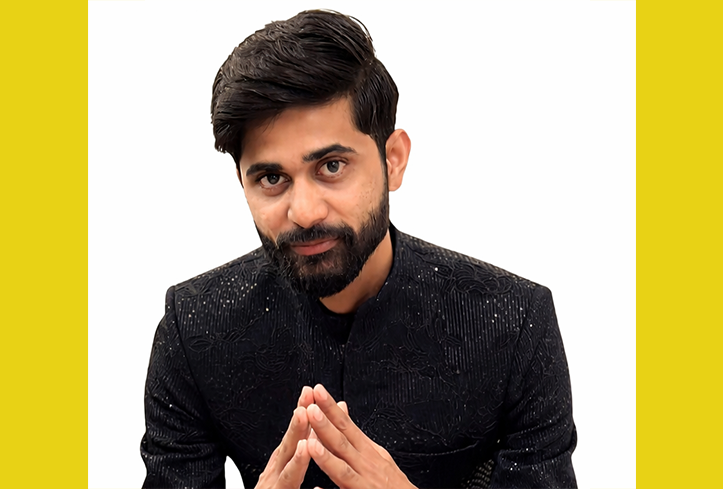
Ankit Sakhiya – A New Voice of Realistic Storytelling in Gujarati Cinema through Laalo Krishna Sada Sahayate
- Mar , 2026
- Abhishek Galshar
When I watched Laalo Krishna Sada Sahayate on SonyLIV, I did not feel bored even for a single moment. In every frame, I could clearly see the dedication and hard work of director Ankit Sakhiya.
One particular scene stands out when Karan Joshi and Reeva Rachh, portraying a husband and wife, argue inside their home. The sequence is captured in a handheld long take, reflecting a strong understanding of visual grammar and cinematic language. It feels raw, real, and deeply immersive.
The film is filled with beautifully picturized moments that connect directly with the audience’s heart. While watching, I was reminded of the emotional depth often seen in Iranian cinema. Filmmakers like Majid Majidi, known for Children of Heaven, and Asghar Farhadi, the Oscar-winning director of The Salesman, have mastered this style of simple yet powerful storytelling.
In many ways, Ankit Sakhiya’s work reflects a similar sensitivity. His storytelling is honest, visual, and emotionally engaging. He represents a new wave of Gujarati cinema, and his success is a matter of great pride.
An Inspiring Journey Behind the Success
The success of Laalo – Krishna Sada Sahayate, which crossed ₹100 crore at the box office, marks a significant milestone for Gujarati cinema. Actor Karan Joshi shared this achievement publicly, calling it a major victory for the entire team.
However, behind this remarkable success lies the inspiring journey of Ankit Sakhiya.
Born in the small village of Meta Khambhaliya near Gondal, Ankit’s early life was full of challenges. Even watching films required him to travel 30–35 kilometers. Despite limited exposure, his passion for cinema was strong from a young age, though many people around him doubted his dreams.
During school vacations, he would visit Surat, where he played ghughra in a gaushala band to entertain people. Although this was not always socially appreciated due to his family background, these experiences quietly shaped his artistic vision.
Before entering filmmaking, Ankit pursued civil engineering. Yet, his passion for cinema never faded. Over time, he transformed his interest into a profession, developing both creative and technical mastery in filmmaking.
Filmmaking Style
Ankit Sakhiya’s filmmaking style can be described as:
Realistic and natural – inspired by real-life situations
Visual storytelling – emotions expressed through camera rather than dialogue
Handheld camera use – creating a raw, documentary-like feel
Long takes – allowing scenes to breathe and feel authentic
Focus on relationships – highlighting human emotions and everyday conflicts
Minimalism – avoiding unnecessary drama and keeping storytelling pure
In short, his cinema is simple, honest, and deeply emotional, focusing more on visuals than words.
A Source of Inspiration
In my view, Ankit Sakhiya is a naturally gifted talent who has further strengthened his craft through technical excellence and dedication. His journey—from a small village to delivering a ₹100 crore film—is a powerful example of perseverance and belief.
He stands today as an inspiration for the next generation of filmmakers, proving that with passion, struggle, and commitment, dreams can truly become reality.
Written for OTT Cinema Diaries
For more information, visit: www.ottcinemaaward.com